Use a Mesh Meeting Chair to Preserve Visual Openness
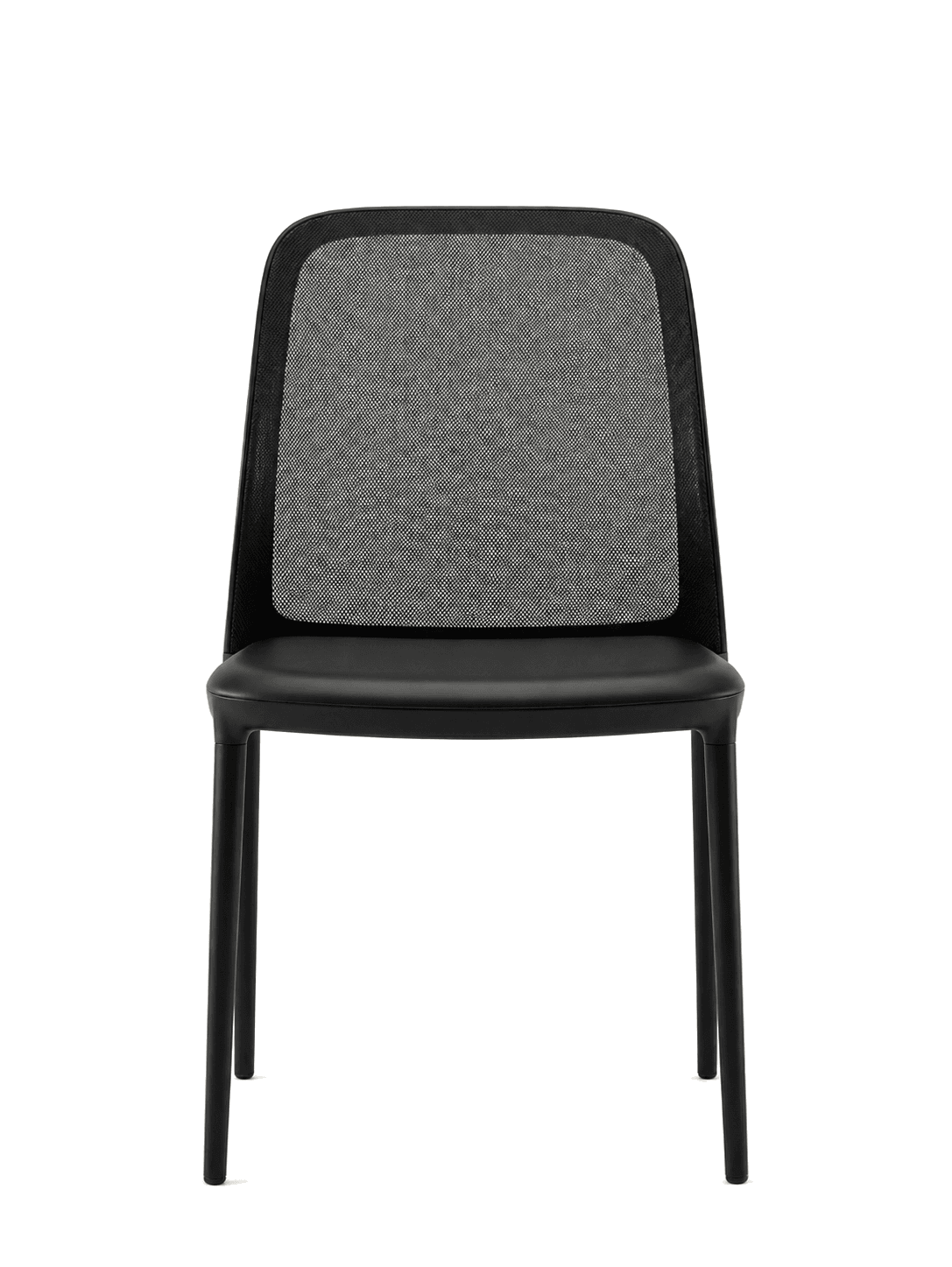
A conference table and its surrounding chairs occupy a large share of the visual field. The mesh back of Flex maintains a defined silhouette without becoming an opaque surface, allowing daylight, material textures and long views to remain part of the room. This visual permeability is particularly useful in glass-lined meeting rooms and restrained architectural interiors, where every object needs to contribute without making the space feel crowded.
Design for the Small Movements That Happen in Meetings
People rarely remain in one fixed posture during a discussion. They turn toward a colleague, lean in to review a document and shift back while listening. Flex is designed around this reality: its flexible shell follows the sitter's movement, while the aluminum base provides stability. The result is a meeting chair conceived for active participation rather than a static pose.
Specify the Chair and Conference Table as One Composition
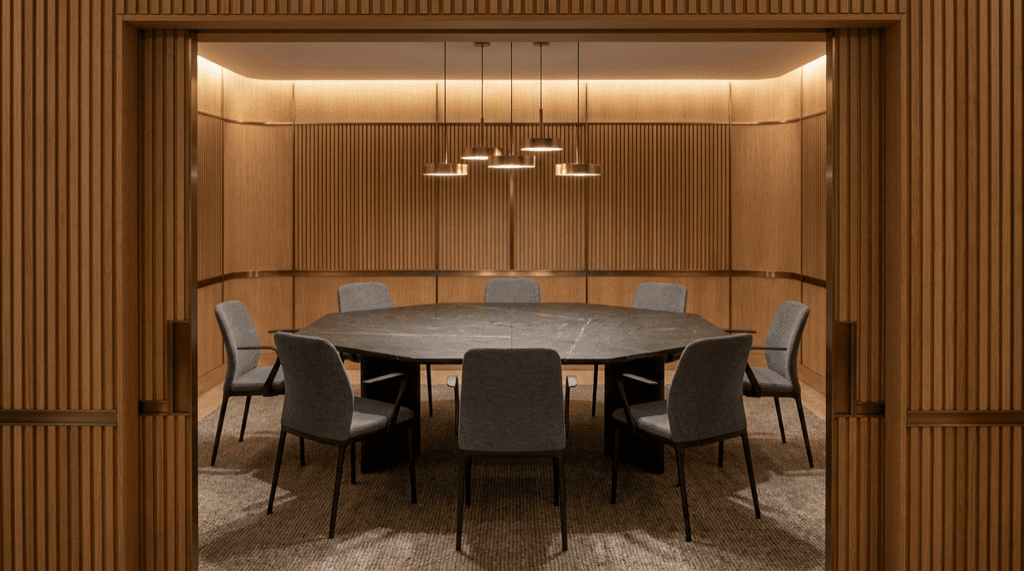
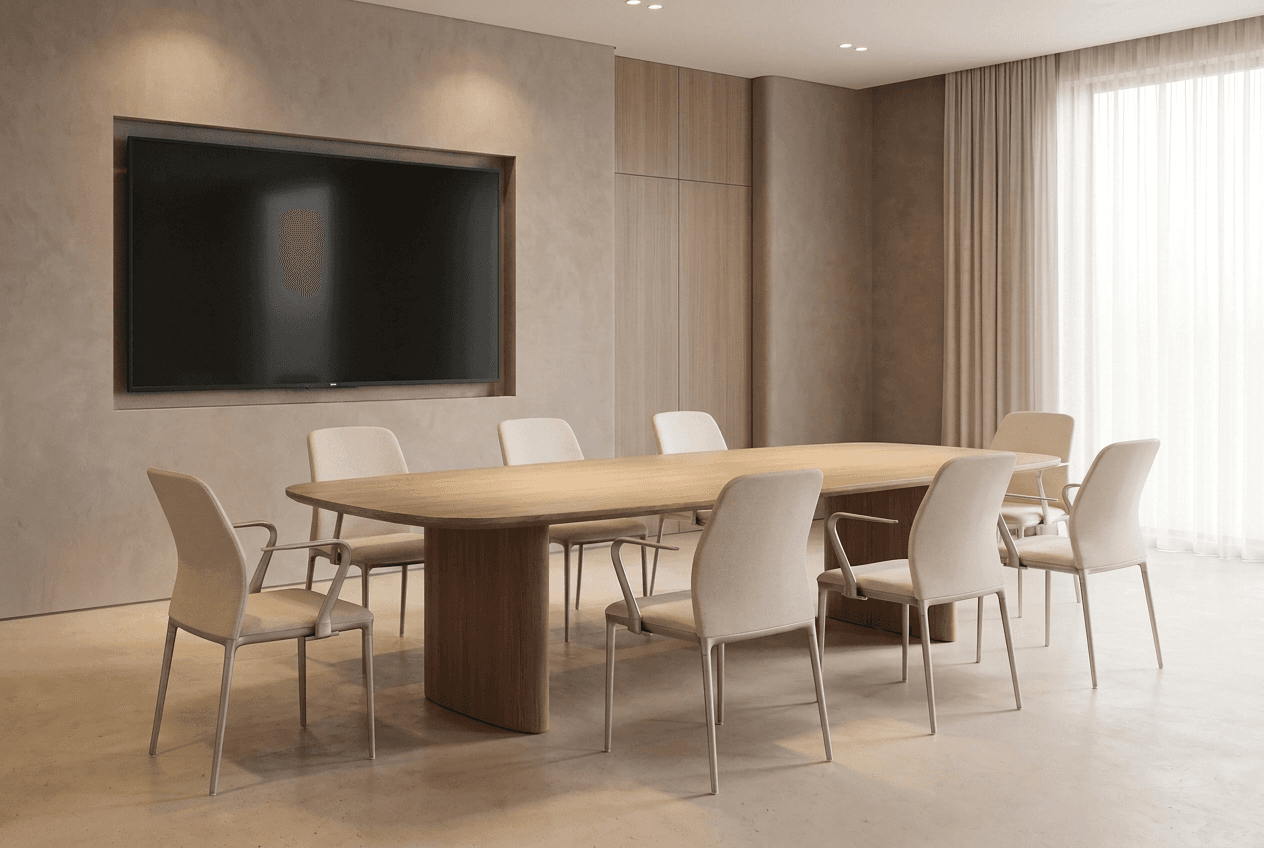
A timber-lined boardroom can take on a calm, intimate character with grey seating and a dark tabletop. In a brighter room, white chairs around a pale timber table create a more open impression. These contrasting settings show why meeting chairs should be selected as part of the whole composition. Project teams can review chair colour and finish against the table, floor, wall surfaces and lighting rather than choosing seating in isolation.
Define Project Requirements Before Choosing a Finish
For meeting and training environments, begin with room capacity, table dimensions, typical session length and the desired material palette. Flex is offered in several finishes and configurations, and Hanson Furniture supports OEM and ODM programmes for volume projects. Giving dealers and designers a clear brief at the outset makes it easier to align the chair specification with both the interior concept and day-to-day operation.